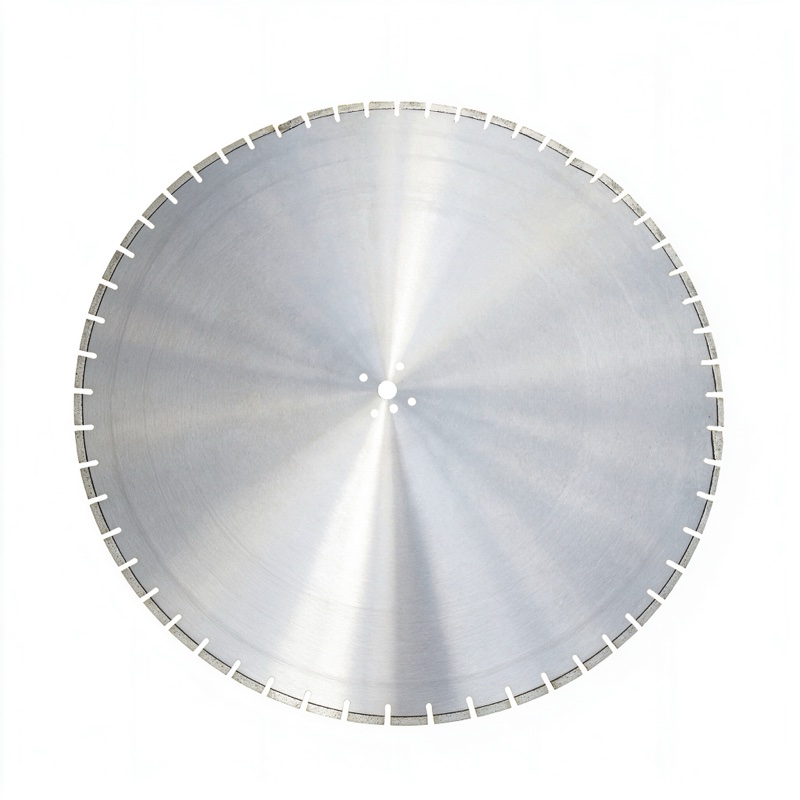
Cut embedded rebar with a laser-welded diamond blade in a tough bond — the same blade you use for reinforced concrete. The key is technique: slow the feed when you hit rebar, let the blade grind through the steel rather than forcing it, and keep the cut wet to control heat. A laser-welded blade with a hard segment bond survives the impact; a brazed blade will shear segments on the first bar. For heavy rebar, consider a dedicated metal-cutting blade or a two-stage cut (concrete first, then rebar).
Diamond blades are designed for abrasive materials. Steel is tough and ductile — it blunts diamond grit and shears brazed segments. Laser-welded blades hold their segments against the impact, and a hard bond keeps diamonds exposed when cutting through steel.
| Step | Action |
|---|---|
| 1. Cut concrete | Cut through the concrete normally with a laser-welded blade |
| 2. Slow on rebar | Reduce feed rate when you hear the steel contact |
| 3. Let it grind | Don't force — the blade should chew through steel slowly |
| 4. Keep wet | Water cools the steel and blade, preventing heat damage |
| 5. Finish | Resume normal feed once past the bar |
Our high-horsepower laser-welded blade is engineered for heavily reinforced concrete, and the standard laser-welded blade handles light rebar in everyday cuts.
A>Yes, for exposed rebar. But embedded rebar needs one blade that handles both concrete and steel — a laser-welded diamond blade.
A>Brazed segments can't take steel impact. Switch to laser-welded with a hard bond.
A>About half your concrete feed rate. Let the blade cut steel at its own pace — forcing it causes damage.
A>Yes — it cools the steel (which dulls diamonds when hot) and the blade, doubling life on reinforced concrete.
Cut embedded rebar with a laser-welded hard-bond blade, slow the feed, and keep it wet. Browse our reinforced concrete range for demolition and slab cutting.
