

How to Fix Pad Marks on a Freshly Polished Floor
How to Fix Pad Marks on a Freshly Polished Floor
Quick Answer
Pad marks (streaks or swirls) on a freshly polished floor appear when a dirty pad, leftover coarse grit, uneven pressure, or too-fast stepping skips a grit. Fix them by cleaning the floor, switching to a fresh pad one grit finer, and making slow, overlapping, flat passes. If the streaks are deep, drop back one or two grits and re-polish the affected area before continuing.
Why Streaks Appear
- Dirty pad: a pad loaded with slurry or grit scratches as it goes.
- Coarse dust left behind: not vacuuming between grits lets 200-grit dust scratch the 800-grit pass.
- Skipped grit: jumping 200 → 800 leaves 200 scratches that show as streaks.
- Uneven pressure / tilted machine: heavier on one edge = deeper marks.
- Wrong speed: too fast on resin pads can burn and smear.
How to Fix It
| Symptom | Fix |
|---|---|
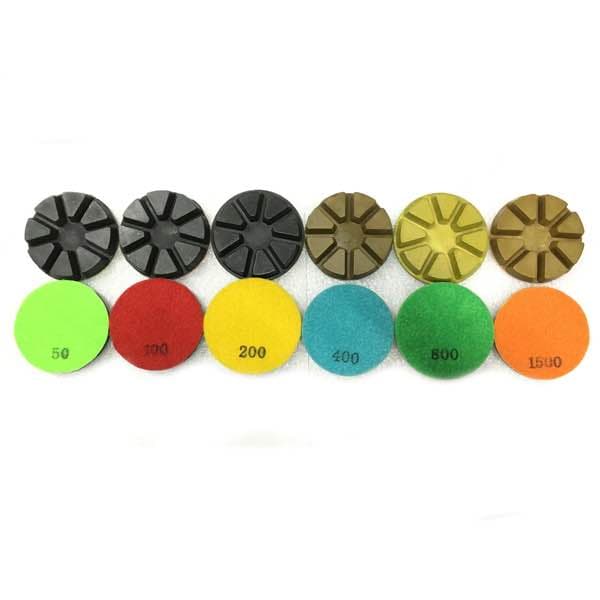
| Light haze / fine swirls | Re-polish with a clean pad, one grit up (e.g. 1500 after 800) |
| Visible coarse scratches | Drop back to the grit that matches the scratch, re-polish, then step up properly |
| Dirty-pad streaks | Dress or replace the pad; vacuum the floor first |
| Burn/smear marks | Reduce speed, increase water (wet) or vacuum (dry), re-pass with fresh pad |
Prevention Checklist
- Vacuum or dust-mop the floor between every grit change.
- Use a fresh or dressed pad for each grit stage.
- Walk the machine in overlapping passes — no skipping.
- Check the finish with raking light before moving to the next grit.
- Finish with a clean resin polishing pad at 1500–3000 to close out any remaining micro-scratches.
Dedicating a matched set — such as our white resin polishing pads — to each project keeps grit stages clean and prevents cross-contamination that causes streaks.
Frequently Asked Questions
Q: Will pad marks come back after the floor dries?
A: They can — marks are often invisible while wet and show once dry. Always check the floor dry with raking light before calling it finished.
Q: Can I fix swirl marks without re-polishing the whole floor?
A: Yes, for local marks: clean the area, re-polish locally with a fine pad, then blend with a full-speed pass over the surrounding area.
Q: How do I know which grit to drop back to?
A: Match the scratch width to the grit that produced it — if you just did 400 then 800 and see streaks, redo the 800 pass properly before going to 1500.
Conclusion
Pad marks come from dirty pads, skipped grits, and uneven passes. Clean between grits, use fresh pads, and re-polish one grit up to erase streaks — then verify dry under raking light before you finish.
Products used in this guide
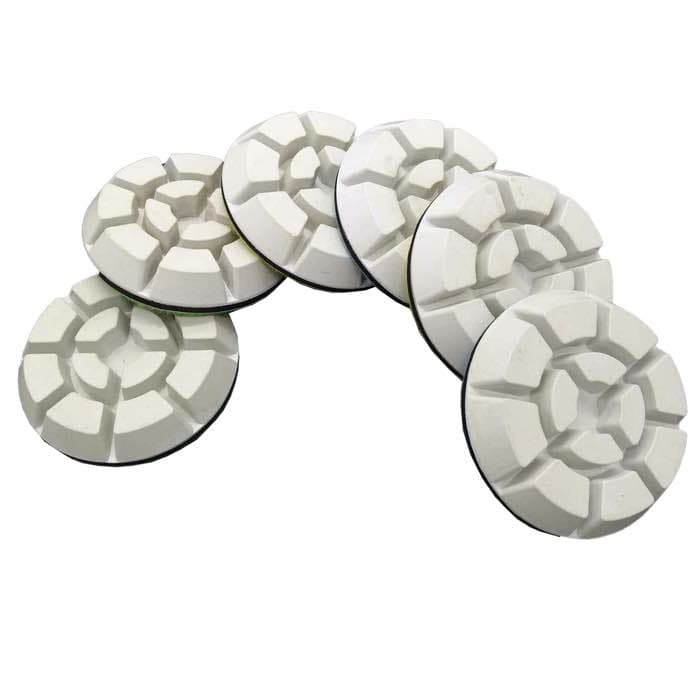
Diamond White Resin Floor Polishing Pads (JOY-RFP-04)
View specs →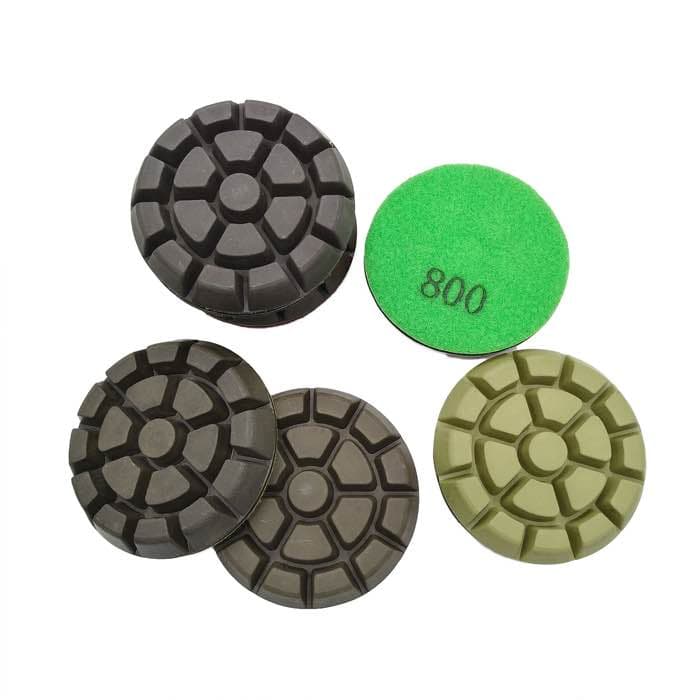
Diamond Resin Floor Polishing Pads (JOY-RFP-02)
View specs →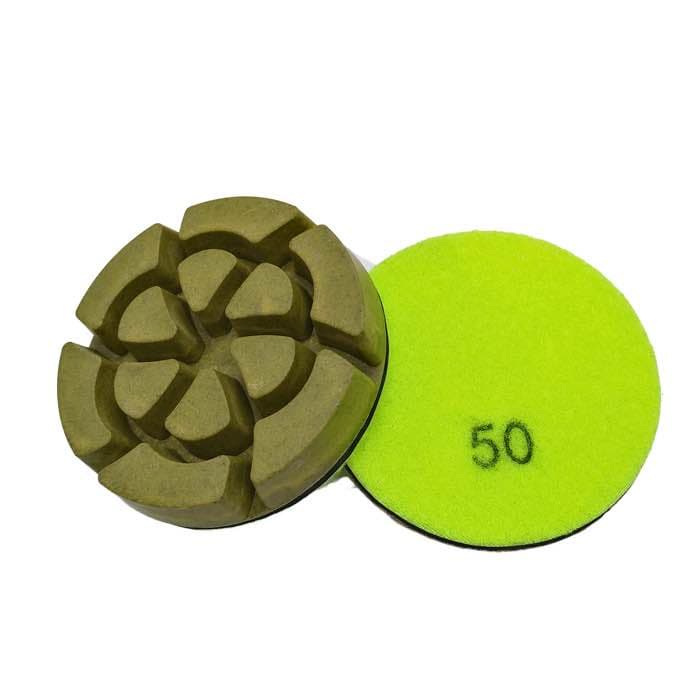
3'' Diamond Resin Floor Polishing Pads (JOY-RFP-05)
View specs →Need this tool for your job?
MOQ 1 · 7–30 days by order quantity · FOB & CIF · free sample on request
Author & Manufacturer
Written and reviewed by JOY TECH — an SGS & BV audited, CE/RoHS certified diamond tools manufacturer founded in 2004, exporting to 50+ countries.
Quality & Compliance
Our factory and QMS are audited by SGS and Bureau Veritas. Products meet CE/RoHS requirements and every piece is 100% inspected before packing.
Verified Certificates
- SGS Audited Supplier — Report No. QIP-ASI227442 & QIP-ASR247051 (Audit Jan 29, 2024)
- Bureau Veritas Verified — Report No. MIC-ASR257059 (Audit Feb 20, 2025)
- CE & RoHS Certificate of Conformity — No. CS240925001HRZ (Issue Sep 25, 2024)