

How to Fix Scratches From Metal Grinding on Concrete
How to Fix Scratches From Metal Grinding on Concrete
Quick Answer
Fix deep metal-grinding scratches by re-grinding the area with fresh coarse metal (30–50 grit), then stepping through transitional pads and polishing 100 → 400 → 800 → 1500 → 3000. Heavy scratches need full removal first — polishing alone only rounds their edges.
Key Features of Scratch Repair
- Depth check: run your fingernail across the scratch — if it catches, the scratch is deep.
- Full removal: deep scratches must be ground out, not polished over.
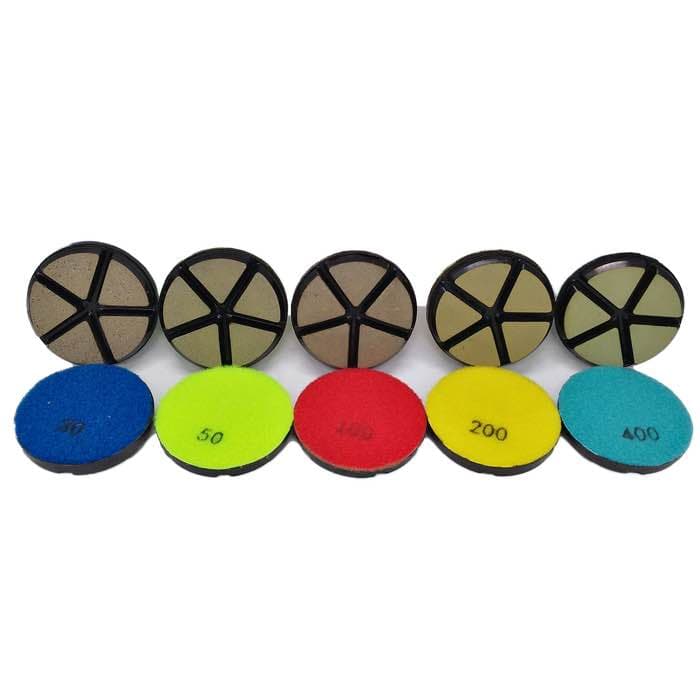
- Transition pads: ceramic or hybrid bonds close the gap between metal and resin.
- Uniform passes: overlap passes to avoid new low spots.
How to Choose the Repair Approach
| Scratch Type | Approach |
|---|---|
| Light haze from worn metal | Polish 100 → 400 → 800 → 1500 |
| Visible but shallow scratches | Transition pads 50–100, then 400–1500 |
| Deep finger-catching scratches | Re-grind 30 grit, then full sequence |
How to Use It
- Mark the scratched area and grind it slightly larger than the damage.
- Remove the scratch completely with coarse metal before any resin step.
- Switch to ceramic bond transitional grinding pads to blend the surface.
- Finish with resin floor polishing pads to match the surrounding gloss.
Frequently Asked Questions
Q: Why did 30-grit metal leave scratches in the first place?
A: Worn segments, too much pressure, or skipping the transitional grits. Replace worn segments and step through 50–100 before resin.
Q: Can polishing hide deep scratches?
A: No — deep scratches must be ground out. Polish only removes the edges, making them wider and more visible.
Q: How do I blend the repaired area with the rest of the floor?
A: Extend each grit slightly beyond the previous one so the repair feathers into the surrounding surface.
Conclusion
Deep scratches are removed, not hidden. Grind them out, close the surface with transitional pads, and match the gloss with resin. Use ceramic transitional pads for a clean handoff between metal and resin.
Products used in this guide
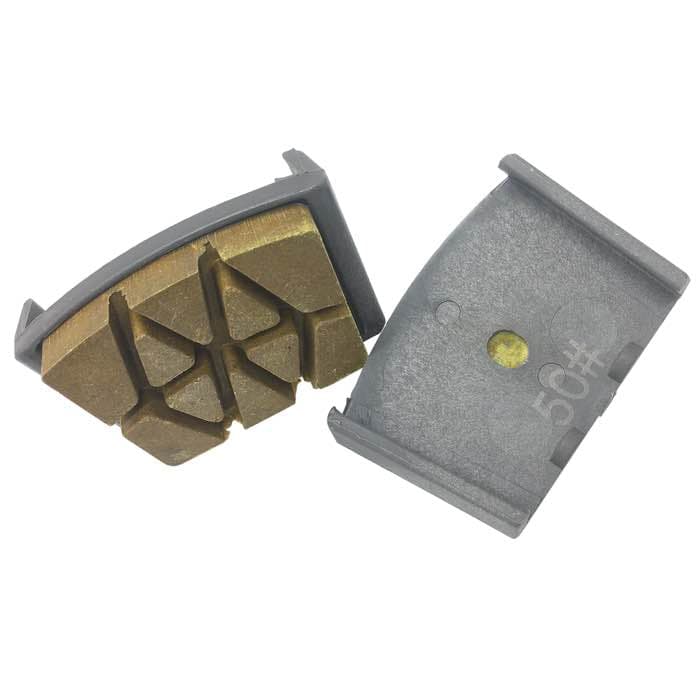
HTC Resin for Concrete Floor Polishing (JOY-HTC-Resin)
View specs →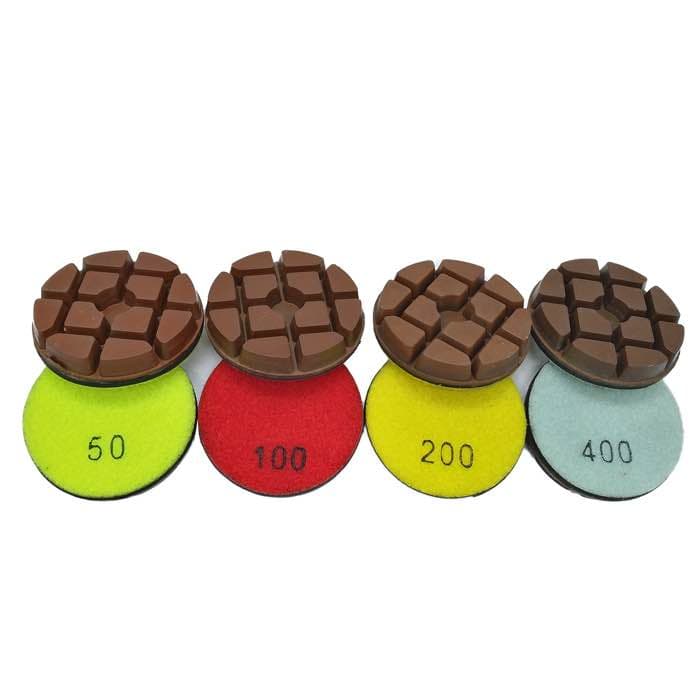
Typhoon Type Diamond Copper Bond Hybrid Resin Polishing Pads (JOY-RFP-C1)
View specs →3'' Ceramic Bond Diamond Transitional Grinding Pads (JOY-RFP-T1)
View specs →Need this tool for your job?
MOQ 1 · 7–30 days by order quantity · FOB & CIF · free sample on request
Author & Manufacturer
Written and reviewed by JOY TECH — an SGS & BV audited, CE/RoHS certified diamond tools manufacturer founded in 2004, exporting to 50+ countries.
Quality & Compliance
Our factory and QMS are audited by SGS and Bureau Veritas. Products meet CE/RoHS requirements and every piece is 100% inspected before packing.
Verified Certificates
- SGS Audited Supplier — Report No. QIP-ASI227442 & QIP-ASR247051 (Audit Jan 29, 2024)
- Bureau Veritas Verified — Report No. MIC-ASR257059 (Audit Feb 20, 2025)
- CE & RoHS Certificate of Conformity — No. CS240925001HRZ (Issue Sep 25, 2024)