

How to Get a Smooth Finish on a Concrete Countertop
How to Get a Smooth Finish on a Concrete Countertop
Quick Answer
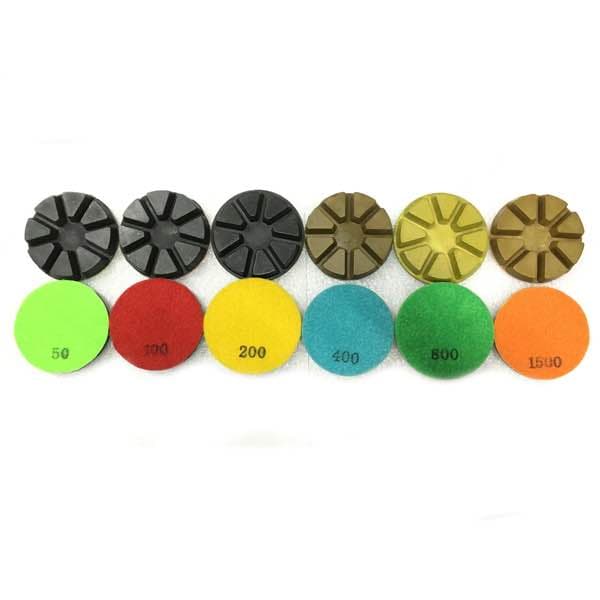
Smooth a concrete countertop by grinding out trowel marks with coarse metal (50–100), then polishing with resin pads through 400 → 800 → 1500 on a variable-speed grinder with a small pad holder. Work the edges with a hand polisher and finish with a food-safe sealer.
Key Features of Countertop Finishing
- Trowel marks: deep ridges need grinding, not sanding, to remove.
- Small format pads: 3–5 inch pads fit grinder edges and tight corners.
- Wet or dry: wet keeps the dust down; dry needs a vacuum and mask.
- Sealing: countertops must be sealed for food contact and stain resistance.
How to Choose the Pad Size
| Area | Pad Size | Tool |
|---|---|---|
| Large surface | 5 inch | Variable-speed grinder |
| Edges and radius | 3 inch | Hand polisher / pad holder |
| Tight corners | Hand pads | By hand |
How to Use It
- Grind trowel marks flat with coarse metal before any resin step.
- Step through triangle resin floor polishing pads or small round pads from 100 to 1500.
- Keep the grinder moving in overlapping passes to avoid dwell marks.
- Clean, let dry, then apply 2–3 coats of food-safe sealer.
Frequently Asked Questions
Q: What grit removes trowel marks?
A: Start at 50–100 metal to grind the ridges flat, then refine with 100–400 resin.
Q: Do countertops need 3000 grit?
A: Not usually — 800–1500 plus a good sealer gives the smooth satin-to-soft-gloss finish most people want.
Q: Can I polish a countertop with a floor polisher?
A: No — use a variable-speed angle grinder with small pads. Floor machines are too large and too fast for counters.
Conclusion
Grind the trowel marks out, step up through resin pads, and seal for protection. Use triangle resin pads for edge work and a small round set for the face.
Finishing at Countertop Scale
Countertop work is slow because the format is small and the edges are irregular. Start coarse enough to remove every trowel mark — finer grits cannot erase deep ridges. Keep the variable-speed grinder at a low setting for edges, and let the pad follow the curve instead of forcing it. Seal after polishing, and choose a sealer rated for food contact; re-sealing is part of countertop ownership, so pick a finish that is easy to touch up. For production shops, keep the small-format pads and backing plates stocked — running out mid-job wastes more time than the pad itself costs.
Products used in this guide
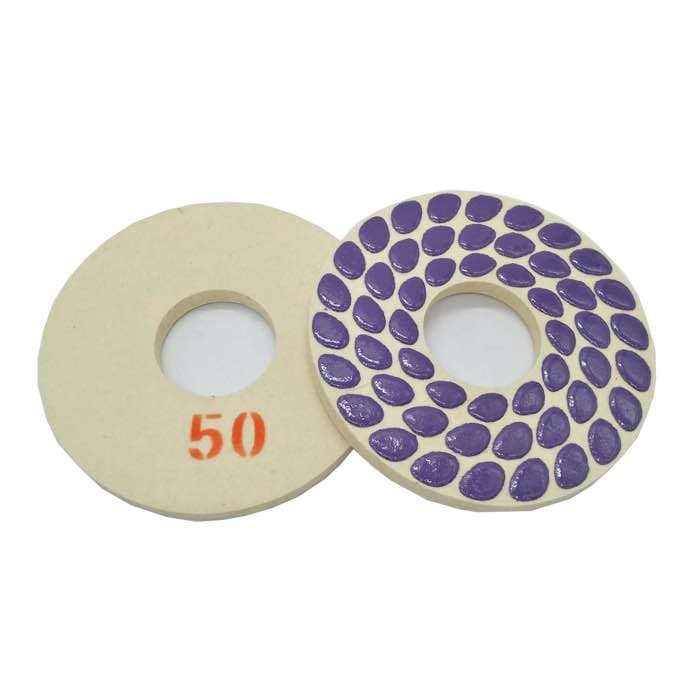
Dry Polishing Wool Pads for Concrete Floor (JOY-RFP-W1)
View specs →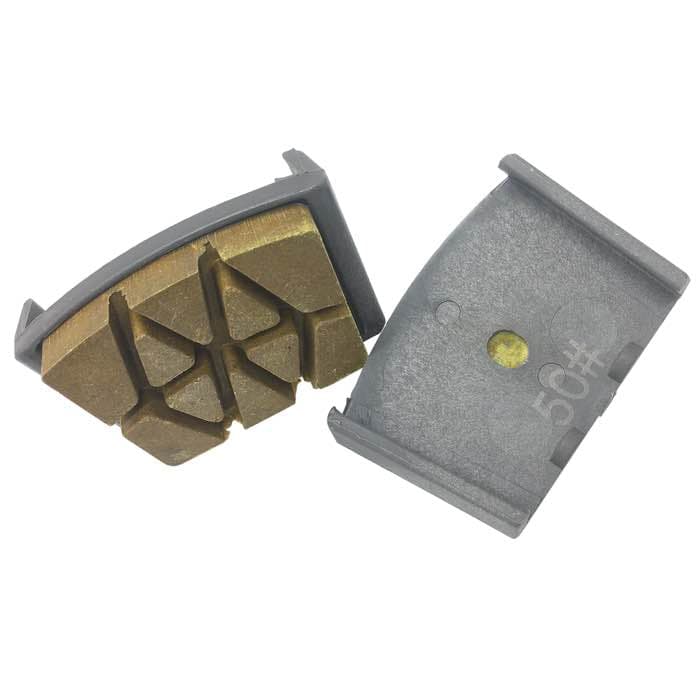
HTC Resin for Concrete Floor Polishing (JOY-HTC-Resin)
View specs →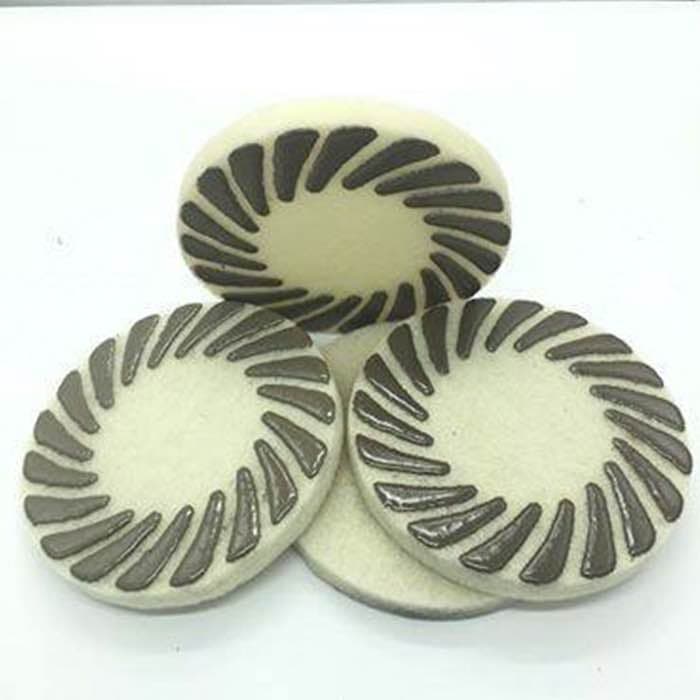
Dry Polishing Sponge Polishing Pads for Concrete Floor (JOY-RFP-SP)
View specs →Need this tool for your job?
MOQ 1 · 7–30 days by order quantity · FOB & CIF · free sample on request
Author & Manufacturer
Written and reviewed by JOY TECH — an SGS & BV audited, CE/RoHS certified diamond tools manufacturer founded in 2004, exporting to 50+ countries.
Quality & Compliance
Our factory and QMS are audited by SGS and Bureau Veritas. Products meet CE/RoHS requirements and every piece is 100% inspected before packing.
Verified Certificates
- SGS Audited Supplier — Report No. QIP-ASI227442 & QIP-ASR247051 (Audit Jan 29, 2024)
- Bureau Veritas Verified — Report No. MIC-ASR257059 (Audit Feb 20, 2025)
- CE & RoHS Certificate of Conformity — No. CS240925001HRZ (Issue Sep 25, 2024)