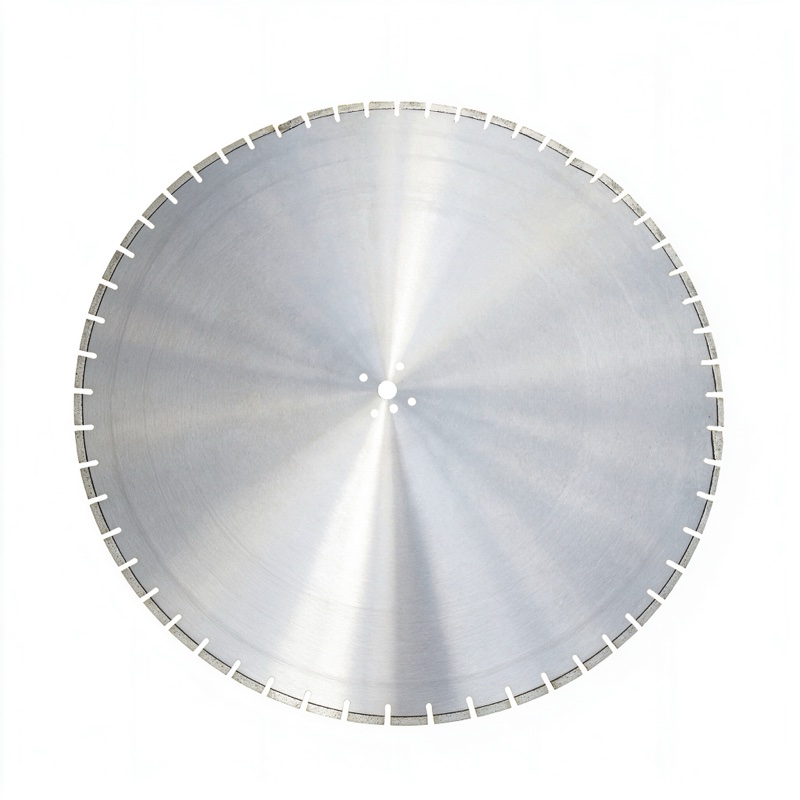
Cutting depth is roughly one-third of the blade diameter minus 10-15 mm for the flange. Practical depths: 350 mm blade ≈ 120 mm, 450 mm ≈ 160 mm, 500 mm ≈ 185 mm, 600 mm ≈ 230 mm. For deeper cuts, use a 700-800 mm blade or cut from both sides. Always use a laser-welded blade for floor saw work — silver-brazed blades cannot handle the heat and side load of a 13-20 HP floor saw.
| Blade Diameter | Max Cutting Depth | Typical Use |
|---|---|---|
| 300 mm (12") | 95 mm | Hand-held saws, control joints |
| 350 mm (14") | 120 mm | Small walk-behind, 10-13 HP |
| 450 mm (18") | 160 mm | Standard floor saw, 13 HP |
| 500 mm (20") | 185 mm | Heavy floor saw, 18 HP |
| 600 mm (24") | 230 mm | High-horsepower saw, thick slab |
| 700-800 mm | 280-330 mm | Big slab cuts, bridge decks |
Laser welding fuses the segment to the steel core in a deep, narrow weld that withstands the high RPM, heat and side forces of a floor saw. Silver-brazed blades can lose segments under floor-saw load — a dangerous ejection. For any floor saw over 13 HP, laser welded is the only safe choice.
Our high-horsepower laser welded blade covers 450-600 mm floor saws, while the general laser welded blade is the daily workhorse for 350-450 mm machines.
A: You need a 700+ mm blade. Most contractors cut 150-200 mm deep and trench the rest, or cut from both sides.
A: Laser welded segments have a narrow, clean weld line with no visible braze alloy. The manufacturer will also state "laser welded" on the label and core.
A: Most 350-500 mm floor saw blades use 25.4 mm (1") arbor with a bushing to 20 mm. Always verify before ordering.
A: Wet is standard for floor saws — it extends blade life 2-3x and controls silica. Dry cutting is only for shallow control joints.
Match blade diameter to your required depth, always choose laser welded for floor saws, and use multiple passes for deep cuts. See the full floor saw blade range for 350-800 mm sizes.
