

Polishing Pads for Concrete Outside: Exterior Use
Polishing Pads for Concrete Outside: Exterior Use
Quick Answer
For outdoor concrete, grind and hone to a satin finish (400–800 grit) rather than a mirror gloss. Work dry with dust extraction, use densifier for weather resistance, and consider anti-slip additives — a high polish outside becomes slippery and stains quickly.
Key Features of Exterior Polishing
- Slip risk: glossy outdoor floors are dangerous when wet — stop at honed (400–800).
- Weathering: direct sun and rain degrade high-gloss finishes fast.
- Dust control: outdoor work still needs a vacuum or wet methods to avoid fines.
- Sealing: a breathable densifier or penetrating sealer protects against moisture.
How to Choose the Finish Level
| Outdoor Use | Recommended Finish | Grit |
|---|---|---|
| Patio / walkway | Honed satin | 400–800 |
| Pool deck | Honed + anti-slip | 400–800 |
| Commercial entry | Honed, sealed | 400–800 |
How to Use It
- Grind with coarse metal only where the surface needs leveling.
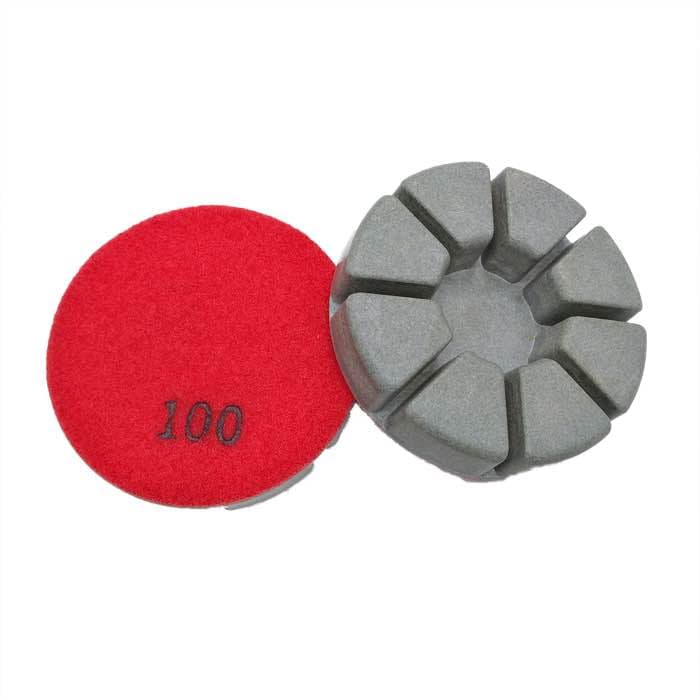
- Polish dry with dry polishing pads and a connected vacuum.
- Stop around 800 grit for a satin, low-slip finish.
- Apply densifier and optionally an anti-slip additive for wet areas.
Frequently Asked Questions
Q: Should I polish outdoor concrete wet or dry?
A: Dry with dust extraction is simpler outdoors; wet is fine if drainage exists, but slurry cleanup is harder on exterior areas.
Q: Why not high-gloss outside?
A: High gloss becomes slippery when wet, shows rain spotting, and weathers unevenly. Honed is the standard exterior finish.
Q: Does outdoor polished concrete need sealing?
A: Yes — a breathable densifier or penetrating sealer protects against freeze-thaw and staining.
Conclusion
Match the finish to the environment: satin, sealed and slip-resistant outdoors. Use dry polishing pads for clean exterior work and stop at 800 grit.
Finishing That Lasts Outdoors
Outside, a satin honed finish is both safer and more durable than mirror gloss: wet feet on high-gloss concrete are a slip hazard, and sun plus rain degrade the reflective layer quickly. Use a breathable densifier rather than a film-forming sealer, because trapped moisture ruins external finishes from below. Sweep and rinse regularly, and avoid salt-based de-icers that stain the surface. If anti-slip properties are required, choose the finish grit and sealer together — the wrong combination creates either a slippery surface or a dull patch. Test a small outdoor area through a season before committing the whole floor.
Products used in this guide
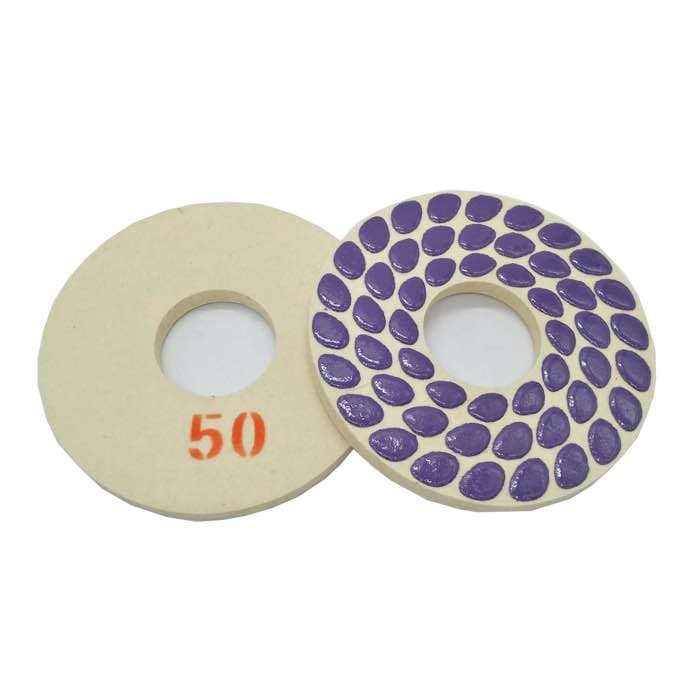
Dry Polishing Wool Pads for Concrete Floor (JOY-RFP-W1)
View specs →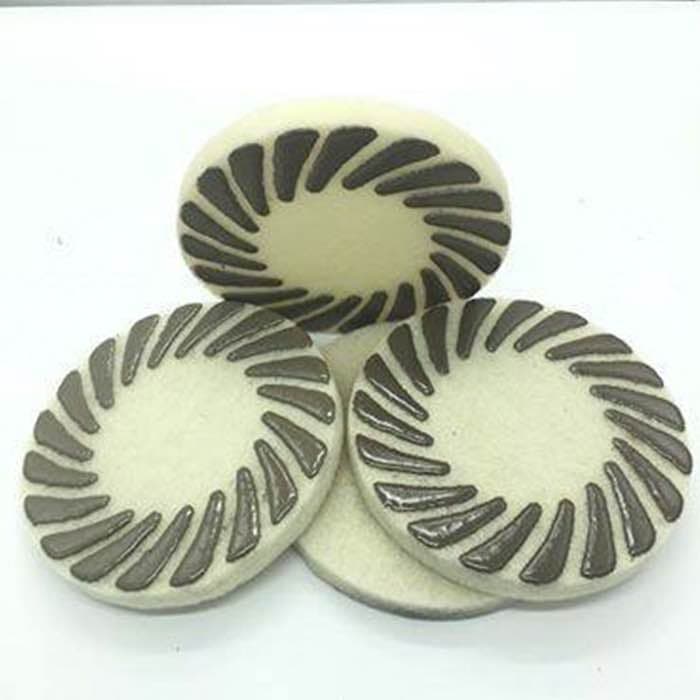
Dry Polishing Sponge Polishing Pads for Concrete Floor (JOY-RFP-SP)
View specs →3'' 15mm Thickness Diamond Dry Polishing Pads for Concrete Floor (JOY-RFP-06)
View specs →Need this tool for your job?
MOQ 1 · 7–30 days by order quantity · FOB & CIF · free sample on request
Author & Manufacturer
Written and reviewed by JOY TECH — an SGS & BV audited, CE/RoHS certified diamond tools manufacturer founded in 2004, exporting to 50+ countries.
Quality & Compliance
Our factory and QMS are audited by SGS and Bureau Veritas. Products meet CE/RoHS requirements and every piece is 100% inspected before packing.
Verified Certificates
- SGS Audited Supplier — Report No. QIP-ASI227442 & QIP-ASR247051 (Audit Jan 29, 2024)
- Bureau Veritas Verified — Report No. MIC-ASR257059 (Audit Feb 20, 2025)
- CE & RoHS Certificate of Conformity — No. CS240925001HRZ (Issue Sep 25, 2024)