

Segment Height vs Blade Life in Abrasive Sandstone
Segment Height vs Blade Life in Abrasive Sandstone
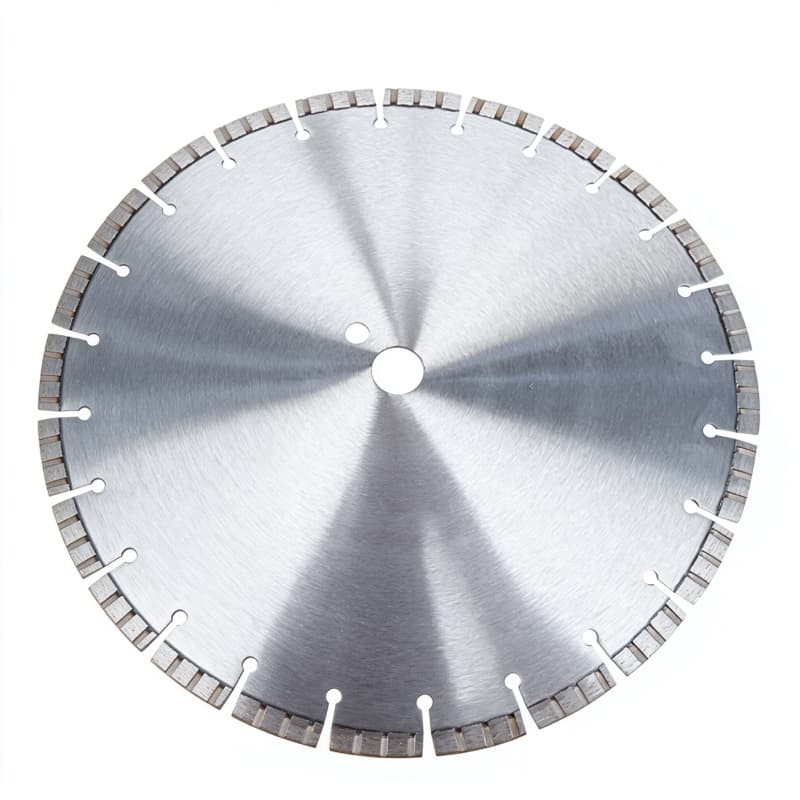
Quick Answer
For abrasive sandstone, a taller segment does not automatically give a longer life. The bond must wear fast enough to keep diamond exposed, and the segment height must leave enough steel core protected. A 10 mm segment cuts faster and costs less; a 12 mm or 15 mm segment gives more reserve only if the bond is matched to the rock.
What Segment Height Really Changes
Segment height is the diamond-bearing depth above the core. As the blade cuts, the segment wears down. When the segment is shorter than about 2 mm, the steel core starts to contact the stone, and the blade stops cutting efficiently.
A taller segment gives more usable depth, but it also increases the load on the bond. In soft, abrasive sandstone, a hard bond with a tall segment can glaze before the segment is worn out. A softer bond with a shorter segment may cut faster and finish the job with less total cost.
Sandstone Conditions
Sandstone varies from friable and porous to dense and siliceous. The abrasive quartz grains wear the bond mechanically. If the bond is too hard, the diamond is held until it is dull; the blade then polishes the cut instead of cutting it.
Use a blade with a hard bond and a moderate diamond concentration for dense sandstone. For friable sandstone, a softer bond and a lower concentration clear the fines and keep the cut free.
Height Selection
| Segment height | Best use | Trade-off |
|---|---|---|
| 10 mm | Small saws, short runs, friable sandstone | Faster cut, lower initial cost, less reserve |
| 12 mm | General stone cutting, mixed sandstone | Balanced life and speed |
| 15 mm | Large saws, dense sandstone, long runs | More reserve, higher load and cost |
Frequently Asked Questions
Q: Does a taller segment last longer in sandstone?
A: Only if the bond matches the rock. A hard bond with a tall segment can glaze and wear the core before the segment is used up.
Q: When should I replace the blade?
A: When the segment is about 2 mm above the core, or when the cut slows and the blade starts to polish the surface.
Q: Can I use a granite blade on sandstone?
A: It will cut, but the hard bond usually glazes in soft sandstone. A softer bond clears the abrasive fines better.
Conclusion
Choose segment height by the saw, the rock and the run length, then match the bond. A universal stone cutting blade is a practical starting point; for clean marble cuts, a straight-slot marble blade gives a faster, cleaner kerf.
Products used in this guide
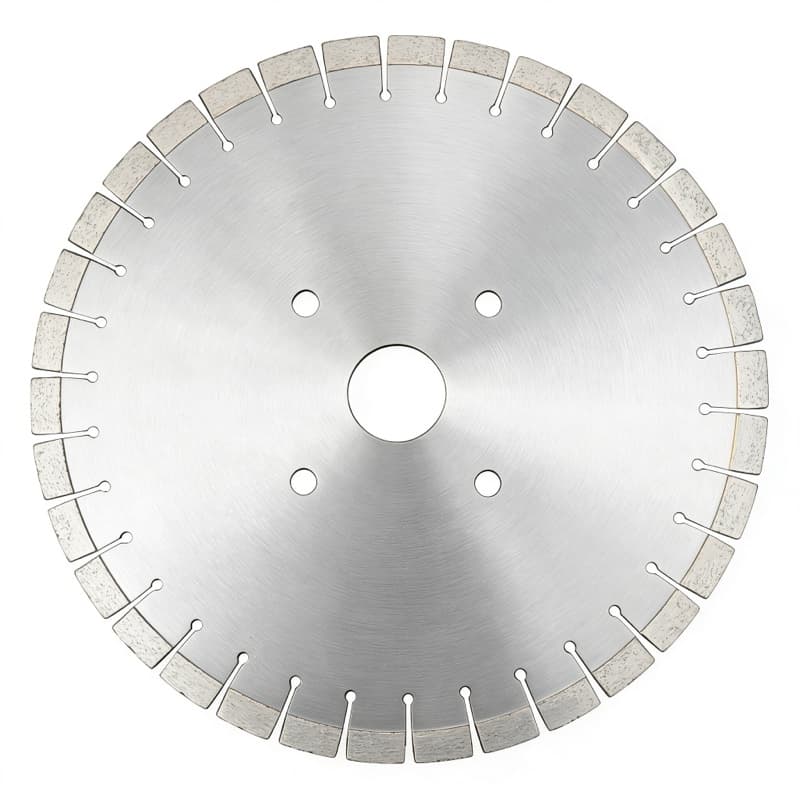
Universal Stone Cutting Blade — JOY-US
View specs →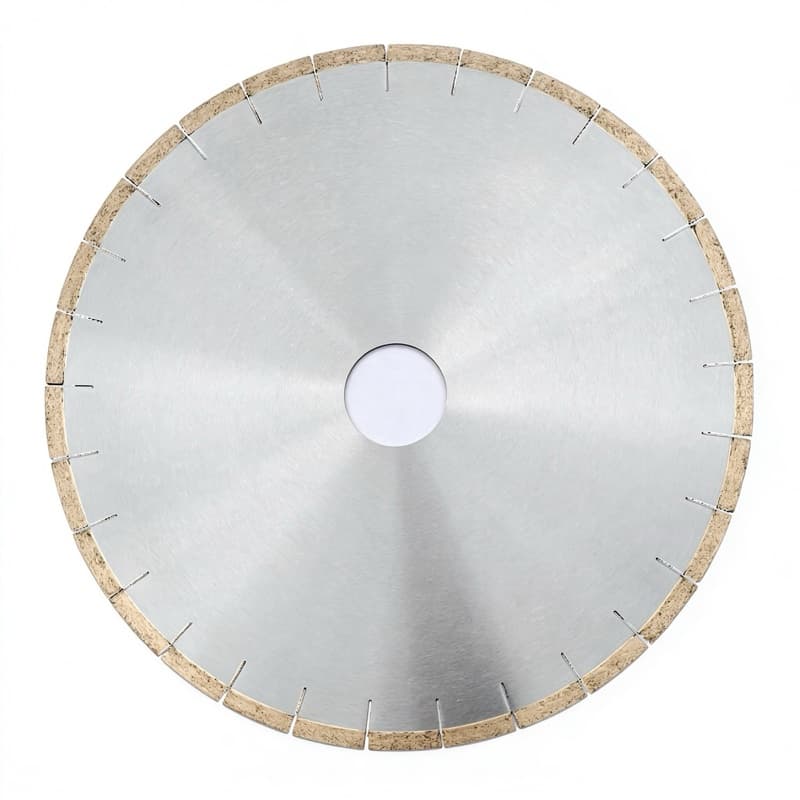
Marble Saw Blade (Straight Slot) — JOY-MS-ST
View specs →Need this tool for your job?
MOQ 1 · 7–30 days by order quantity · FOB & CIF · free sample on request
Author & Manufacturer
Written and reviewed by JOY TECH — an SGS & BV audited, CE/RoHS certified diamond tools manufacturer founded in 2004, exporting to 50+ countries.
Quality & Compliance
Our factory and QMS are audited by SGS and Bureau Veritas. Products meet CE/RoHS requirements and every piece is 100% inspected before packing.
Verified Certificates
- SGS Audited Supplier — Report No. QIP-ASI227442 & QIP-ASR247051 (Audit Jan 29, 2024)
- Bureau Veritas Verified — Report No. MIC-ASR257059 (Audit Feb 20, 2025)
- CE & RoHS Certificate of Conformity — No. CS240925001HRZ (Issue Sep 25, 2024)