
Silver Brazed vs Laser Welded Blade for Demolition
Silver Brazed vs Laser Welded Blade for Demolition
Quick Answer
For demolition work, always use a laser-welded blade. Silver-brazed blades are cheaper but the braze alloy softens at around 600-700°C, and demolition cuts generate heat quickly when the blade binds on rebar or thick concrete. A laser-welded segment is fused directly to the core and survives that heat. Silver brazed blades are fine for light DIY and tile work, but they are a safety hazard on demolition cut-off saws.
How Each Weld Works
Silver brazed: segments are glued to the steel core with a silver-copper brazing alloy melted in a furnace. It's cheap, but the alloy has a low melting point and can let go under heat or side load.
Laser welded: a laser melts the segment's metal powder and the steel core together in a narrow, deep weld. The joint is as strong as the base materials and withstands temperatures that would soften braze.
Head-to-Head
| Factor | Silver Brazed | Laser Welded |
|---|---|---|
| Weld strength | Good for light use | Excellent, survives abuse |
| Max heat resistance | ~600°C | ~1,200°C |
| Rebar / demolition | Segment loss risk | Safe |
| Wet or dry | Wet only | Wet or dry |
| Cost | Lower | 30-80% higher |
| Best for | Tile, light masonry, DIY | Concrete, rebar, floor saws, demolition |
Why Demolition Is Different
Demolition cuts are erratic: the blade binds, hits hidden rebar, cuts thick reinforced walls, and runs dry when water lines are damaged. The heat in a binding segment can exceed 800°C in seconds. A silver-brazed blade can shed a 100 g segment at 5,000 RPM — that's a projectile.
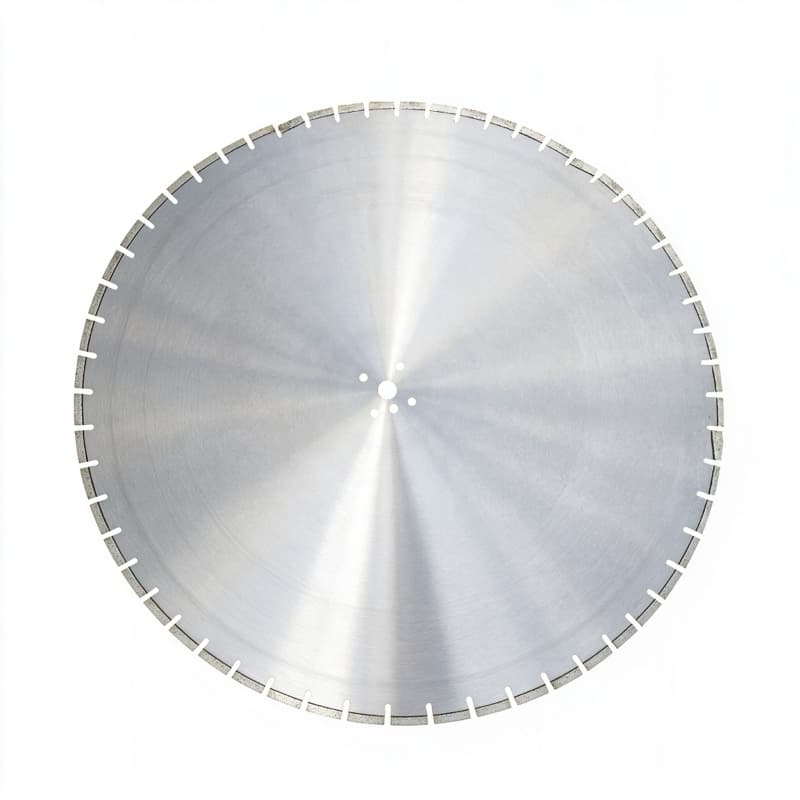
Our high-horsepower laser-welded blade is built for demolition and reinforced concrete, while the general laser welded blade handles daily floor saw and utility work.
Safety Tips
- Never use a silver-brazed blade on a floor saw or demolition cut-off saw.
- Inspect the core for cracks before every use — replace if you see one.
- Stand behind the blade plane, not beside it — segment ejection travels tangentially.
- Use the correct flange size; oversized flanges crack cores.
Frequently Asked Questions
Q: How can I tell if a blade is laser welded?
A: Look at the weld line — laser welded has a narrow, clean silver bead with no visible braze fillet. The label will also state "laser welded."
Q: Are laser welded blades worth the price?
A: For professional demolition, absolutely — a single segment ejection can cause injury and downtime. The extra cost is trivial compared with safety.
Q: Can I use a laser welded blade on tile?
A: Yes, but it's overkill. A turbo tile blade cuts cleaner and costs less for tile work.
Q: What does a failing braze look like?
A: Discolored (blue/purple) weld line, visible gaps, or segments that move slightly under hand pressure. Stop using the blade immediately.
Conclusion
For demolition, reinforced concrete and floor saw work, laser welded is the only safe choice. Silver brazed blades belong on small tile and masonry jobs. Browse our laser welded blade range for 300-600 mm demolition saws.
Products used in this guide
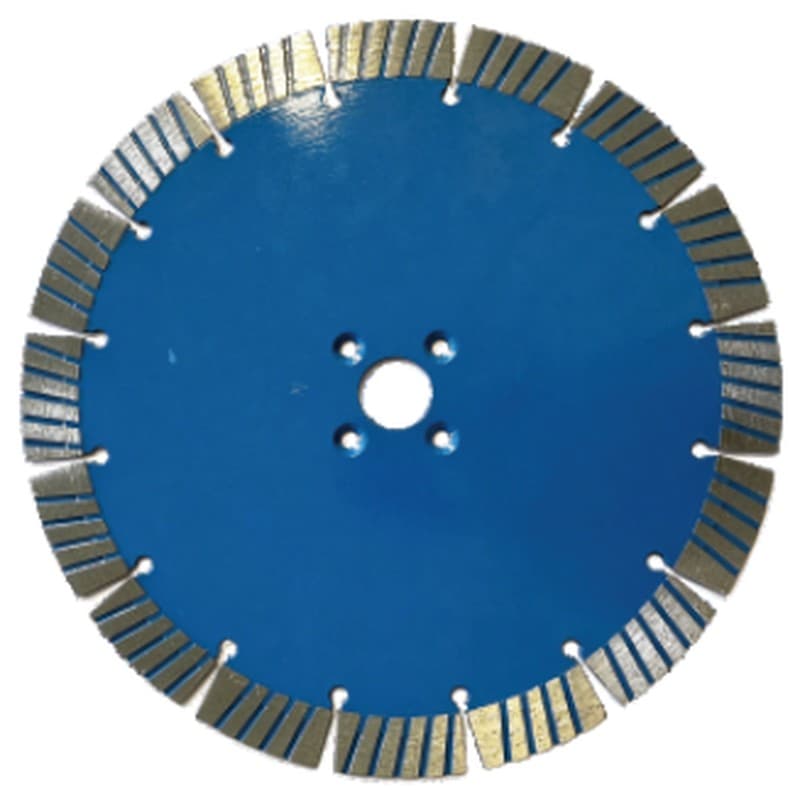
General Purpose Turbo Dry Blade — Dark Blue Deep — JOY-GP-02
View specs →Laser Welded High Horsepower Blade — JOY-LW-HH
View specs →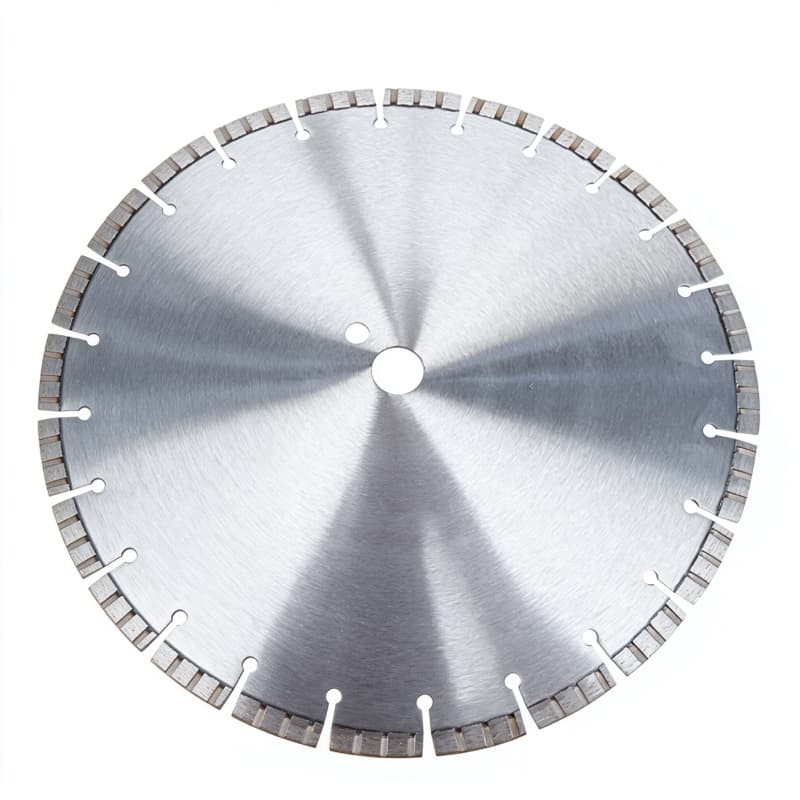
Concrete and Asphalt Saw Blade (Laser Welded) — JOY-CA-LW
View specs →Need this tool for your job?
MOQ 1 · 7–30 days by order quantity · FOB & CIF · free sample on request
Author & Manufacturer
Written and reviewed by JOY TECH — an SGS & BV audited, CE/RoHS certified diamond tools manufacturer founded in 2004, exporting to 50+ countries.
Quality & Compliance
Our factory and QMS are audited by SGS and Bureau Veritas. Products meet CE/RoHS requirements and every piece is 100% inspected before packing.
Verified Certificates
- SGS Audited Supplier — Report No. QIP-ASI227442 & QIP-ASR247051 (Audit Jan 29, 2024)
- Bureau Veritas Verified — Report No. MIC-ASR257059 (Audit Feb 20, 2025)
- CE & RoHS Certificate of Conformity — No. CS240925001HRZ (Issue Sep 25, 2024)