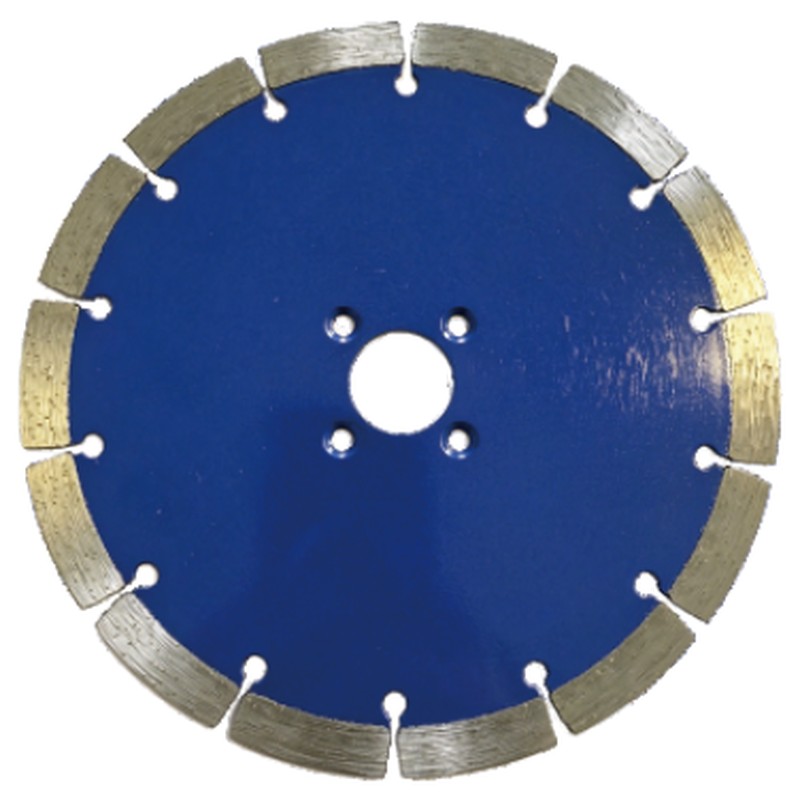
A tuck pointing blade is a small (100-125 mm) diamond disc with a U-shaped or toothed profile designed to rake out old mortar joints for repointing. Fit it on a 4" or 5" angle grinder with a dust shroud, set the depth guide to the joint depth, and run it along the joint. It removes soft mortar cleanly without damaging brick edges, cutting repointing time by 80% compared with hand chisels.
| Blade Type | Best For | Joint Width |
|---|---|---|
| U-shaped profile | Standard mortar joints | 6-13 mm |
| Toothed / toothed rim | Hard mortar, partial rake | Any, adjustable |
| Diamond cup (raker) | Wide joints, fast removal | 10-20 mm |
| V-shaped | Precise V-notch joints | Narrow |
A general-purpose turbo dry blade is a solid backup for joint widening, while a dedicated tuck pointing disc keeps brick edges clean.
A: Not safely — a flat blade can't control joint depth and will chew the brick edges. Use a profiled tuck pointing disc.
A: Typically 15-20 mm, or 2/3 of the joint depth — deep enough for the new mortar to key in.
A: Use a toothed tuck pointing blade and take multiple passes. If it's truly unworkable, consider grinding the joint wider first.
A: Yes — a crew raking by hand does 5-10 m² a day; with a tuck pointing blade, 40-60 m².
Tuck pointing blades turn mortar raking from a slow hand job into a fast mechanical one. Browse our small-diameter cutting range for angle grinder discs and accessories.
