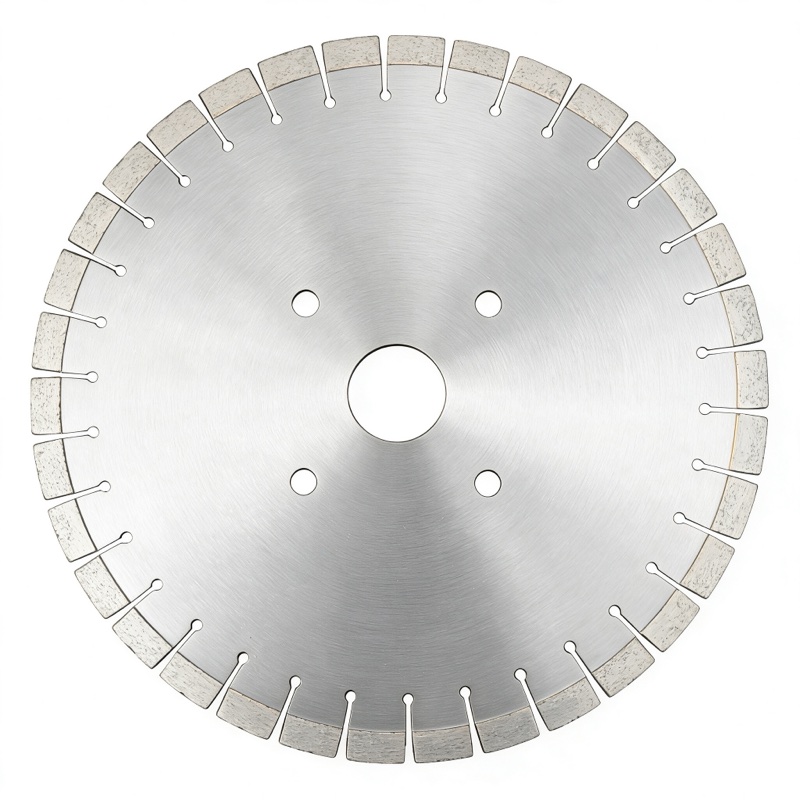
Yes, a universal diamond blade is a smart choice for rental crews, handymen and general contractors who cut a mix of concrete, block, brick and tile on the same job. It won't match the speed or life of a dedicated concrete blade on thick slab, or a turbo blade on porcelain, but it eliminates the need to carry 4-5 blades. For dedicated professionals who cut one material all day, a purpose-built blade still wins on cost per cut.
A universal blade uses a compromise segment design — medium bond, medium segment height, and a rim geometry that works across hard concrete, soft brick and glazed tile. It's engineered to cut acceptably on everything, rather than optimally on one material.
| Material | Universal Blade | Dedicated Blade |
|---|---|---|
| Plain concrete | Good, slightly slower | Excellent |
| Reinforced concrete | OK on light rebar | Laser welded, hard bond |
| Brick / block | Excellent | Standard segmented |
| Porcelain tile | OK, slight chipping | Turbo mesh, chip-free |
| Asphalt | Short life | Soft-bond asphalt blade |
Our universal stone cutting blade covers brick, block, tile and light concrete in one disc. When the job turns to heavy slab or reinforced concrete, step up to a laser-welded concrete blade.
A: On its target material, 30-50% faster and 2-3x longer life. But if you cut 5 materials a day, the universal saves blade changes.
A: Light rebar, yes. Heavy rebar needs a dedicated laser-welded demolition blade.
A: For hand-held saws, 350 mm is the most versatile. For tile saws, 115-125 mm turbo universal.
A: Yes, when rated for your saw. Buy from a reputable manufacturer — cheap universal blades shed segments.
Universal blades are a productivity tool for mixed-material jobs, not a replacement for dedicated blades in production cutting. Browse our cutting range for universal, concrete, tile and asphalt blades.
