Average response time: under 24 hours
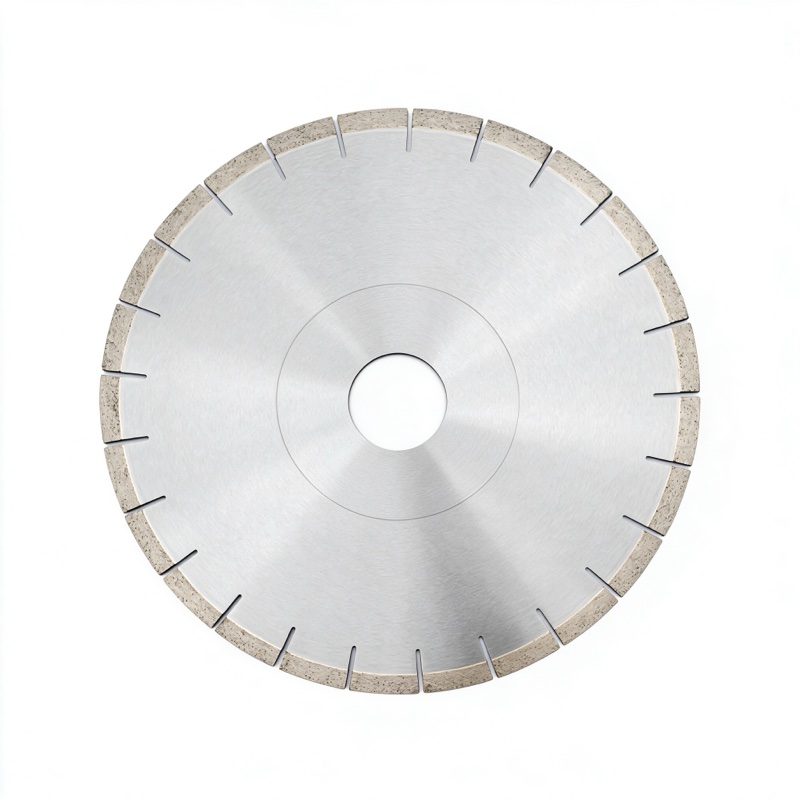
A pre-shipment inspection for diamond tools takes 1-2 days on-site at the factory and costs USD 150-300 through a third party (SGS, BV, QIMA, or a local inspector). Sample 80-130 cartons at AQL 2.5 general level II. The checks that matter: blade run-out <0.15 mm, segment height measured on 10 random pieces, laser weld pull-test on 3 pieces (minimum 30,000 N), bore tolerance +/-0.2 mm, branding and carton artwork correct, country-of-origin label present, and 1-2 test cuts on a concrete block. Skip the inspection and you risk receiving 1,000 blades that glaze over on your customer's substrate; inspect and the issue is fixed before the cargo ships.
ANSI/ASQ Z1.4 AQL 2.5 general level II is the standard for tooling. For an order of 3,200 pcs, the sample size is 200 pcs. Acceptable defects: 14. Rejectable defects: 15. 'Critical defects' (sharp edge missing, cracked core, wrong bore) use AQL 0.65: accept 1, reject 2. This sounds low, but a single cracked blade in service is a safety liability. The inspector pulls cartons from different positions on the pallet, not just the top layer, to catch 'front-loading' (good pieces on top, defective below).
| Check | Method | Tolerance / spec | Sample size |
|---|---|---|---|
| Blade run-out | Dial indicator on arbor | <0.15 mm | 10 pcs |
| Segment height | Caliper measure | Spec +/-0.5 mm | 20 pcs |
| Bore diameter | Bore gauge | +0.0 / -0.2 mm | 20 pcs |
| Weld pull-test | Tensile tester | >30,000 N | 3 pcs |
| Visual defect | 100% visual on sample | No cracks, missing segments | 200 pcs |
| Carton / label | Barcode scan, artwork check | Matches approved proof | 10 cartons |
| Functional cut | Cut on known concrete | No glazing in 5 m | 2 pcs |
A visual inspection cannot tell you if the bond is right for your substrate. Bring a 300 mm concrete core sample or a granite tile to the factory and ask the inspector to run two test cuts. Time the cut and observe: does the blade cut freely, or glaze over after 1 meter? A blade that glazes means the bond is too hard for the substrate; it will last 10x shorter on your jobsite. This single 15-minute test catches 90% of bond mismatches that get through every dimensional check. For diamond core drill bits, drill three 50 mm holes in a concrete block and time each hole; a good bit drills 20-40 seconds per hole.
You can inspect yourself on a factory visit, but it is hard to be rigorous in a 2-hour walk-through. A third-party inspector (QIMA, SGS, BV, or a local QC firm) costs USD 150-300 per man-day, writes a photo report, and will not soften bad news to keep the factory happy. For orders below USD 5,000, self-inspection or the factory's own QC report may be enough. For orders above USD 15,000, a third-party inspection pays for itself the first time it catches a problem. You can also require a '100% inspection' service at USD 0.30-0.80 per piece for high-risk SKUs, where the inspector checks every unit before packing.
After the inspection, keep the report with the shipment file for 2 years. It is your evidence if a customer warranty claim surfaces and you need to go back to the factory for credit. The report should include: inspector name and certification, sample size against AQL 2.5, photos of each defect category, batch codes on cartons, and a signed pass/fail verdict. If the factory pushes you to accept a verbal 'passed' without a written report, refuse; verbal QC is not QC at all. For trapezoid grinding disc grinding discs and stone hole saws, also ask the inspector to check arbor fit on a sample mandrel; loose arbor tolerances are a common defect that visual inspection misses.
After 100% of the order is produced and packed, but before the 70% balance payment. The standard clause is 'pre-shipment inspection acceptable to buyer' in the PI. If the cargo has already sailed, inspection is useless.
Document every defect in the report. The factory has 5-10 days to rework or replace defective pieces. Re-inspection costs another USD 150-200, usually borne by the factory if the failure is its fault. Do not release the balance until the re-inspection passes.
Yes, video QC over WeChat or Zoom is increasingly common and costs USD 80-150 per session. It is not as rigorous as on-site (the inspector cannot use a caliper for you), but it catches artwork, branding, and obvious defects. Good for repeat orders from trusted factories.
Inspect the first 2-3 shipments from a new factory. After two clean inspections, drop to every third or fourth shipment, or use a lighter AQL level. Keep inspecting OEM artwork every time, because print runs change.
Pre-shipment inspection is the cheapest insurance in diamond tool sourcing. At USD 150-300 per order, it catches the segment-height shortfalls, weld failures, artwork errors, and bond mismatches that would otherwise cost you a 10x return shipment, a bad Amazon review, or a customer injury. Build the inspection clause into every PI, book it before the balance payment, and treat the report as a condition for releasing the 70%. Your diamond saw blades and diamond core drill bits program will run 2-3x smoother within the first year.
Written and reviewed by JOY TECH — an SGS & BV audited, CE/RoHS certified diamond tools manufacturer founded in 2004, exporting to 50+ countries.
Our factory and QMS are audited by SGS and Bureau Veritas. Products meet CE/RoHS requirements and every piece is 100% inspected before packing.
Verified Certificates
