

How to Hone and Polish Travertine Floors
How to Hone and Polish Travertine Floors
Quick Answer
Hone travertine with diamond pads from 100# to 400# using a light touch and plenty of water — travertine is soft and porous, so aggressive pressure causes gouging and edge rounding. For a gloss finish, continue with resin pads to 1500–3000#; for a matte honed look, stop at 400# and seal.
Why Travertine Needs a Light Touch
Travertine is a soft, porous limestone with natural pits and holes. It cuts fast — too much pressure or a coarse pad removes more than you intend and rounds the edges. The other enemy is acid: anything acidic (including some cleaners) etches the surface instantly.
The Honing Process
- Clean and fill — fill pits and holes with color-matched stone patch, let cure.
- Hone 100–400# — wet, light pressure, overlapping passes.
- Stop at 400# for a matte honed finish, or continue to 800–3000# for gloss.
- Seal — travertine must be sealed to resist stains and etching.
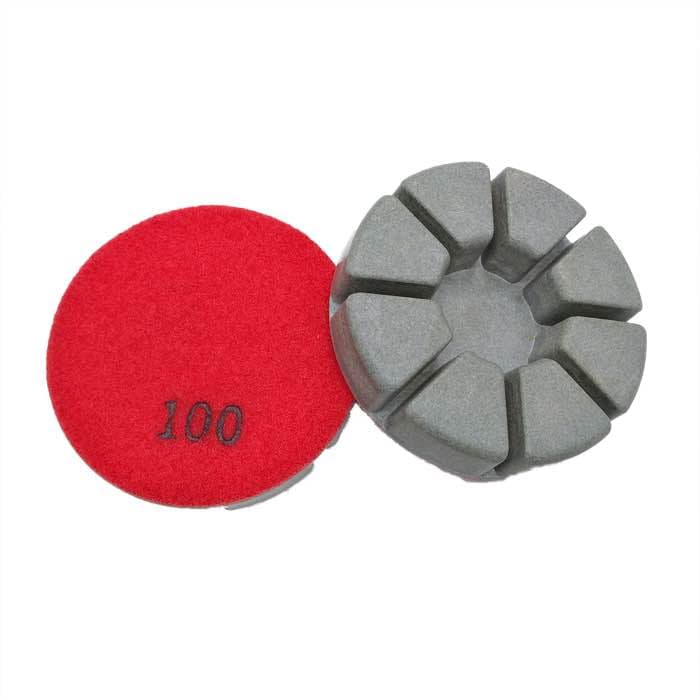
Our 3'' polishing pads work for small areas; floor machines with larger pads speed up full floors.
Frequently Asked Questions
Q: Why does my travertine etch when I clean it?
Acidic cleaners dissolve the calcite surface. Use pH-neutral stone cleaners and seal the floor to slow acid attack.
Q: Should travertine be honed or glossy?
Both are popular. Honed (matte) hides wear and suits rustic interiors; glossy shows off the stone but requires more maintenance.
Q: How often should travertine be re-honed?
With sealing and gentle care, every 3–5 years. Heavy traffic may need annual spot honing in worn paths.
Conclusion
Hone travertine gently — light pressure, water, and the right grit progression — then seal. Choose matte or gloss by the look you want, and protect the soft stone with pH-neutral care. JOY TECH's pads fit the soft-stone sequence.
Protecting a Soft Stone
Travertine forgives little: too much pressure rounds edges, too much acid etches the pits, and too coarse a pad leaves swirls that never polish out. Work wet, keep the touch light, and fill the natural holes before honing so the surface becomes uniform. For floors in service, clean with neutral cleaners only — acidic or abrasive maintenance re-etches the finish and shortens the time between refinishing. Stop at the finish level you can maintain: a matte honed floor hides wear far better than a high-gloss one in high-traffic areas. If the floor has deep pits or damage, patch first and test the patch color match under the same lighting as the room.
Products used in this guide
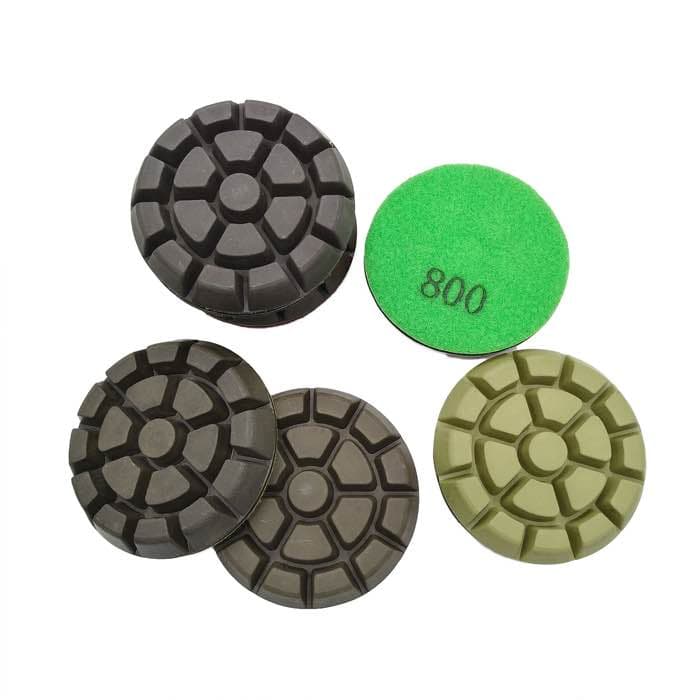
Diamond Resin Floor Polishing Pads (JOY-RFP-02)
View specs →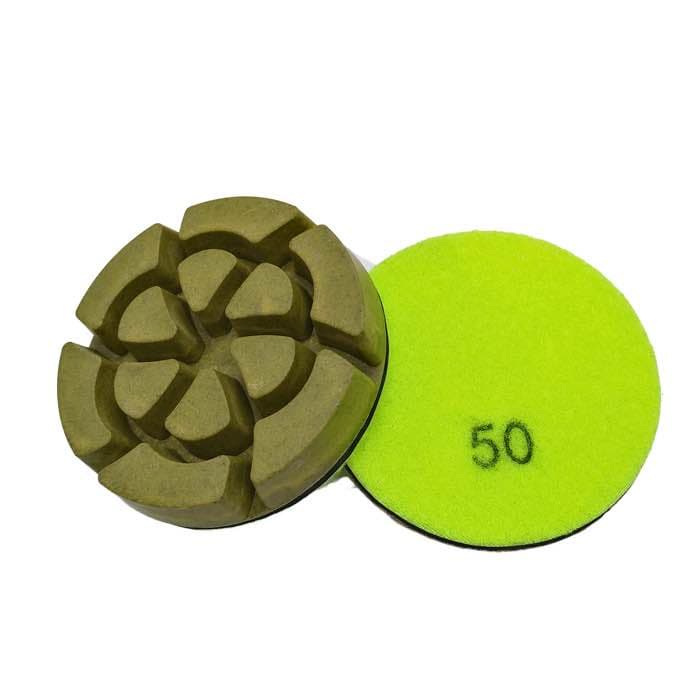
3'' Diamond Resin Floor Polishing Pads (JOY-RFP-05)
View specs →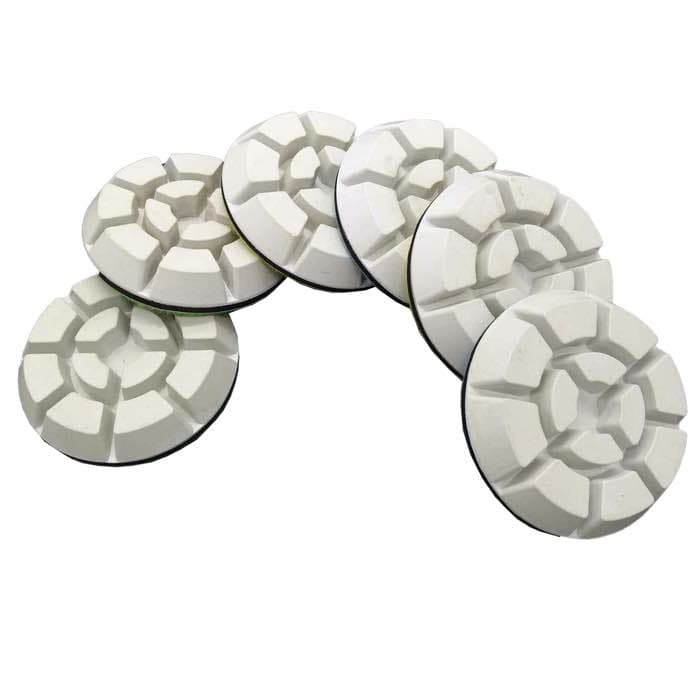
Diamond White Resin Floor Polishing Pads (JOY-RFP-04)
View specs →Need this tool for your job?
MOQ 1 · 7–30 days by order quantity · FOB & CIF · free sample on request
Author & Manufacturer
Written and reviewed by JOY TECH — an SGS & BV audited, CE/RoHS certified diamond tools manufacturer founded in 2004, exporting to 50+ countries.
Quality & Compliance
Our factory and QMS are audited by SGS and Bureau Veritas. Products meet CE/RoHS requirements and every piece is 100% inspected before packing.
Verified Certificates
- SGS Audited Supplier — Report No. QIP-ASI227442 & QIP-ASR247051 (Audit Jan 29, 2024)
- Bureau Veritas Verified — Report No. MIC-ASR257059 (Audit Feb 20, 2025)
- CE & RoHS Certificate of Conformity — No. CS240925001HRZ (Issue Sep 25, 2024)